


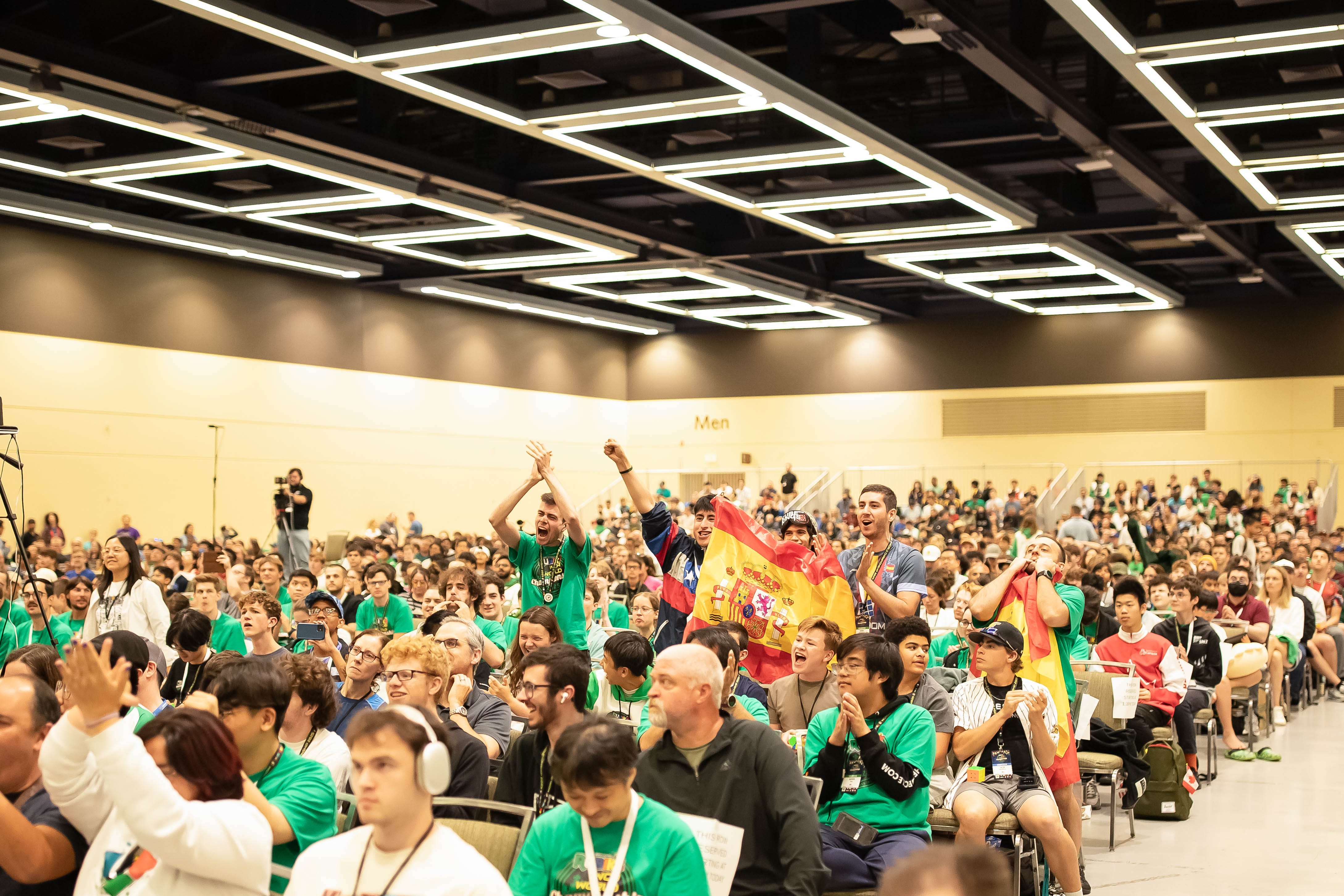
The road to success is often accompanied by a certain level of audacity to make dreams a reality. No organization or person strives to be a global phenomenon without having to take a leap of faith and assert that they are, in fact, a big deal (despite evidence to the contrary). I haven’t been engaged with the sport of speedcubing for a long time; I was first exposed to it by Matthew Mayernik in 2024, when I helped him conduct an interview with Luke Griesser in my adopted city of Lansing, MI. Since then, I’ve witnessed the tremendous growth of the sport and, much to my shock, have found a lot of people who I would’ve never expected to get into cubing involving themselves with the sport, if only casually.
But it just doesn’t feel like the world of speedcubing is as big as it should be. There have been very visible documentaries produced about the biggest cubers ever; some channels have millions of subscribers, and yet it seems like the popularity of the sport remains stagnant when it comes to actual competition. To me, that isn’t a problem caused by the hard work and dedication of the volunteers, competitors, and spectators who make each event an exciting place to be in. Rather, I think it’s been indirectly caused by the inaction at the top levels of cubing, from governing bodies like the WCA to other authorities in the cubing world. It’s as though these bodies as a whole are afraid to push cubing into the mainstream for one reason or another, and I’m not here to speculate on what motivations there could be.
What I can say is this: if the speedcubing world wants to become more known (especially for financial reasons, so cubers can make a living off of what they love), it starts with the decisions made at the top. And I think the first step in the right direction is for the WCA to take more pride in the sport that they govern and treat it like a professional sports league, both in the promotion of its events and cubers, as well as a more assertive attitude when it comes to governing competitions.
Let’s start with that first point: while the WCA does a solid job at promoting speedcubing events back to their core audience, they don’t really do the same for those beyond the speedcubing world. In that way, it makes the whole sport feel like an insular community rather than the open, welcoming space that it actually is. I’m not saying that the WCA should go full sellout mode and pump out slop to get more eyes on events, but I think they should take a more active role in highlighting competitions that are going on, the same way that we at SD do so each week with our “Weekend Ahead” posts. The same thing goes for getting more involved with the promotion of the biggest cubers in the sport, not just as athletes, but as people that others want to be invested in and look up to. Showcase them, have them do stuff beyond the realm of just speedcubing, and that will give those not involved with the sport a reason to connect. Do you think the NBA would’ve become as popular as it did without the clever promotion of trailblazers like Magic and Bird? Probably not.
The second point is a bit harder to execute, but much easier resource-wise to start practicing. Other sports are very clear about what their rules and regulations are for how competition is to be conducted, as well as the penalties for transgressing those rules and regulations. For one reason or another, competitions conducted under the WCA banner seem to lack this same rigor when it comes to the enforcement of these rules, even when they’re laid out clearly in the rulebook. If the WCA were more decisive and assertive when it came to the actual events they put on, we wouldn’t have to worry as much about things like Yiheng Wang’s sliding controversies, or Ryan Pilat’s intentional losses, and it’d keep the competition more focused on the game rather than ways to exploit it (see the Dylan Miller PSL situation for more on that).
I’m not writing any of this to be hateful or to pour cold water on the great situation that the WCA is in; cubing has experienced a lot of growth over the past couple of years, thanks to the hard work that the organization does. But cubing needs to have a little bit of audacity, a little bit of delusion, a little bit of truly believing that this thing is going to go somewhere. If we can model ourselves more like a real sports league and take it more seriously, I think that we can right this stagnant ship and put it on a course for success and growth for years to come.