



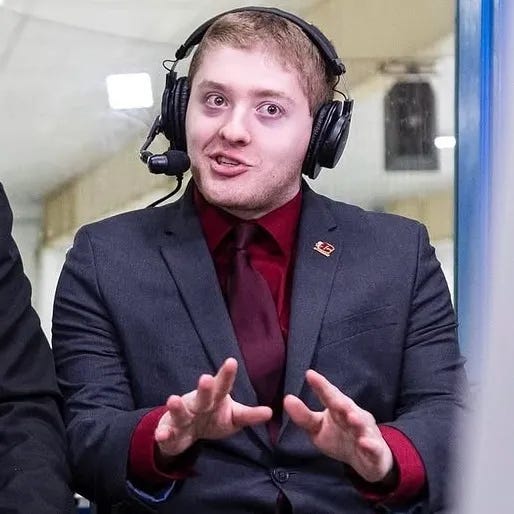
In November 2024, I was a senior at Central Michigan University, building my path as a sportscaster. I was working on MHTV’s production crew, co-hosting a sports talk radio program, calling games on WMHW-FM and for CMU Athletics on the Chippewa Sports Network, and contributing to the CMU Club Hockey Network as a play-by-play broadcaster, analyst, and public address announcer.
By that point, I had broadcast seven different sports in two years at Central Michigan: six NCAA Division I teams and one club team, along with a Michigan high school football game at Kelly/Shorts Stadium. Those experiences built the foundation for where I am today.
Then came the opportunity I never saw coming.
One cold November day, I got a text from Matthew Mayernik asking if I wanted to try play-by-play for a Rubik’s Cube competition. I hesitated. I had spent over four years calling traditional sports, and this was completely outside that world. But versatility matters. After thinking it through, I told him, “Yes.”
That decision changed everything.
My first cubing broadcast was Indiana Championships 2024. I was probably the least qualified person for the job. Despite working with SpeedcubingTV since 2023, I had zero real experience with speedcubing itself.
So I prepared the only way I knew how. I researched top competitors like Luke Garrett, Luke Griesser, Brian Johnson, and Zeke Mackay, studied their results and times, and tried to understand what mattered in a solve.
I leaned on advice from Dan Miller, who once said preparation is like having a full bucket of information and still leaving most of it unused. The event always comes first.
On the day of the competition, I had already finished a basketball broadcast and was worn out. But in broadcasting, you still have to deliver for the audience.
I logged on, and it was showtime.
I was nervous. I remember thinking I had no right to be calling that competition. But as I settled in and relied on my prep, I found a rhythm.
Then I saw a comment from STUCUBE in the live chat on YouTube:
“Goody gumdrops. Michael Rosenkranz is peak.”
That was when things started to click.
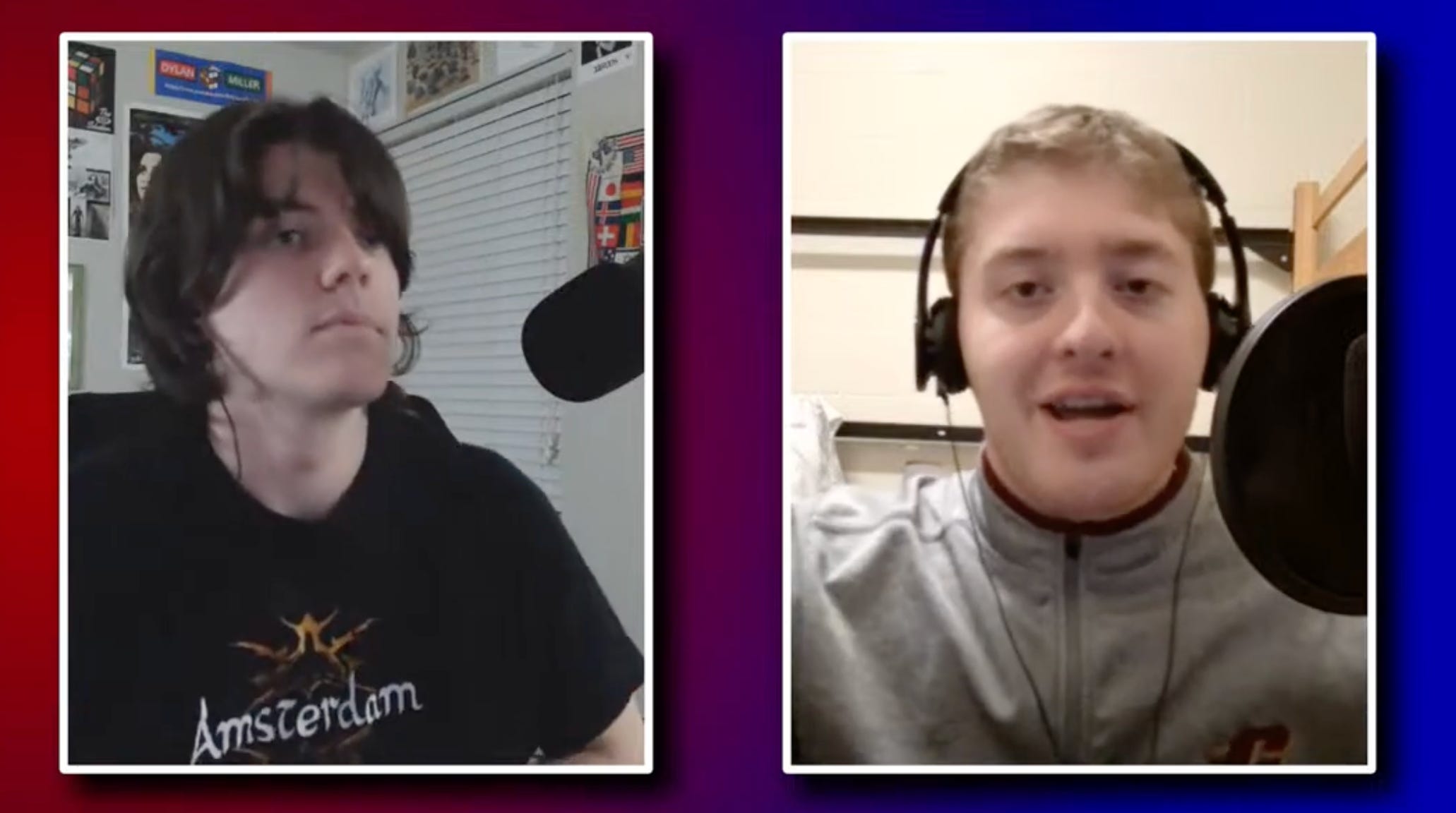
I called the event alongside Dylan Miller, ranked 20th in the world in 3x3 at the time. I was not just representing myself, but SpeedcubingTV and a community I was just beginning to understand.
From the start, I knew my style would be different. The hardest part for me, and still is, is identifying complex algorithms like OLL, PLL, and ZB in real time.
So I focus on what I can clearly communicate: turn speed, pauses, lockups, time, pressure, and momentum.
I rely on my analyst for the deeper technical breakdowns, and I try to bring their expertise into the broadcast by asking questions and giving them room to explain what is happening. In that sense, I am often learning in real time with the audience.
My job is not to pretend I know everything. It is to tell the story of the solve, guide the viewer through the moment, and help the analyst bring the technical side to life.
That approach led to one of the most surreal moments of my career.
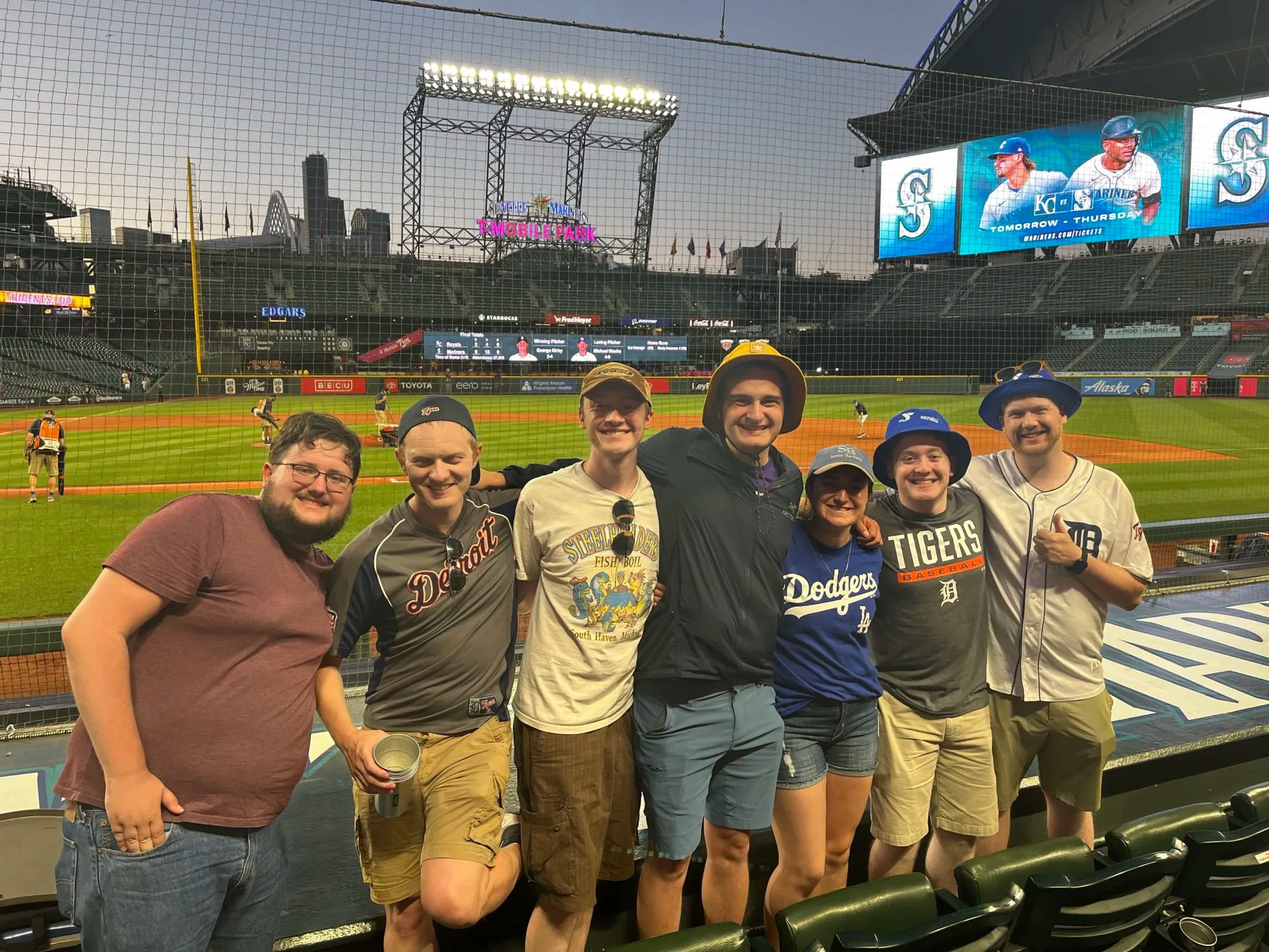
After covering the 2025 World Championships in Seattle, I woke up to a text from my dad. He had sent me a timestamp from a CBS Sunday Morning segment highlighting the event.
I opened the clip.
About a minute and twenty seconds in, I heard it.
My voice.
It was my call from the solves that secured China’s back-to-back Nations’ Cup title. Out of all the broadcasters and all the moments from that event, they used that call.
As someone who entered speedcubing with no competitive cubing background, that meant a lot to me. It was an incredible honor, and one I do not take for granted.
Since then, I have met amazing people in this community and shared what I have learned with other broadcasters.
Commentating speedcubing has become one of the most enjoyable experiences of my life. It is also one of the most fun things to explain to people. I get to say that, alongside traditional sports, I also call Rubik’s Cube competitions.
I usually tell people, “Believe it or not, it’s a real thing.”
And now I can say, confidently, that it is something I do and something I love.
I am grateful I said yes to something unfamiliar. Stepping outside your comfort zone is not always easy, but sometimes the opportunity you never expected becomes one of the most worthwhile decisions you make.
What a great article! It's awesome to read the heart and story behind one of my favorite commentators. Thank you for sharing this.