


Cubing commentary is harder than it seems. You may think that anyone can just jump into the booth and cast like it’s nothing. Should be really easy since we talk a lot about cubing right? It turns out that almost everyone struggles their first time in the booth. So how should one get into commentary and how do you improve? I’m not a perfect caster, but I want to explore some fundamentals and lessons I’ve learned from my experience casting at all levels thus far that those starting out (or considering trying it out) should keep in mind.
Know How to Fill
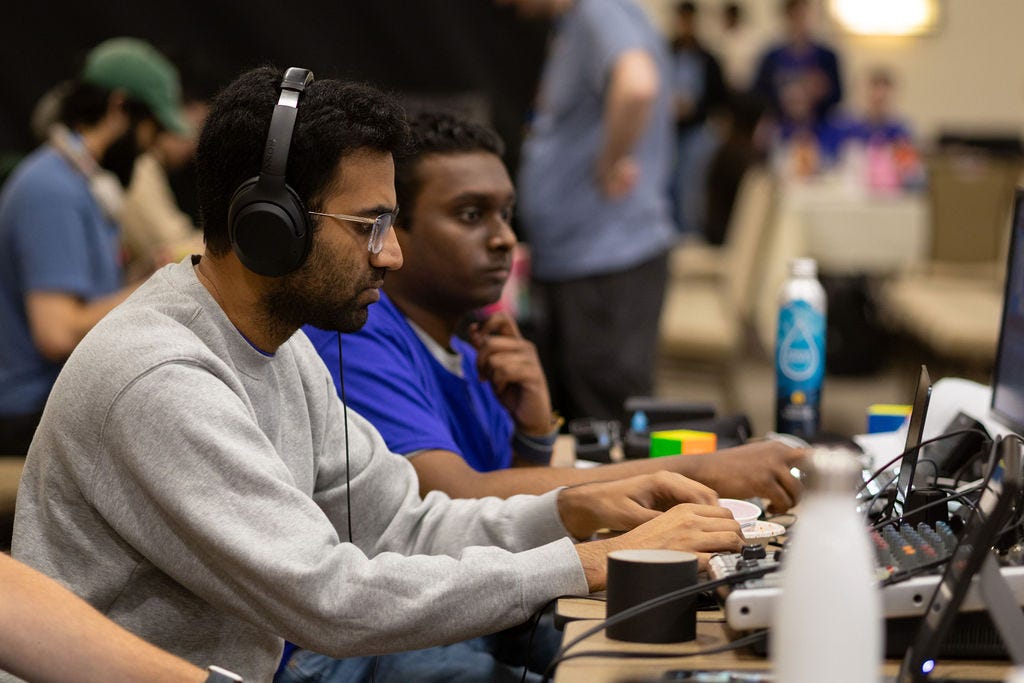
Of course, you need some level of knowledge about speedsolving, but that doesn’t mean top solvers are automatically awesome casters. Everyone initially struggles with filling the gaps between solves with entertaining and insightful commentary, and this is where most people realize it’s not always about what you know but also how to deliver it. In my opinion (this is an editorial after all), most people dramatically overestimate how good they are at filling time when a solve or replay isn’t actively going on. There are always loads of related topics you can fall back on: recent competition results for the solvers you’re tracking, context about the competition, a funny story about cubing, basically anything that the audience might find interesting. This is especially important as the play-by-play commentator, as your role is to help tell the story of the event as it plays out. Set the stage and introduce the key figures during this downtime; it’ll really help flesh out the plot and make it much easier for someone across the world to watch. For example, listen to FIFA World Cup broadcasts. When the ball is in the middle of the pitch, and the action is at a lull, the casters don’t just stop talking. You’ll hear mention of results from other matches, the state of the group table, something interesting about the national teams, and lots more.
Teach the Audience
On that, remember that the audience isn’t always familiar with the rules and regulations of cubing; many people watching may be relatives who last interacted with puzzles in the 80s or newer cubers who are just getting into the hobby. It’s definitely fair game to drop hints about how the game is played. A baseball caster may say something “fouled off, the count remains 2-2, still looking for the strike to end the at bat”. American football is even more obvious; how often do you hear Tony Romo give his take on pass interference or Kirk Herbstreit go through the rules of targeting with the rules analyst? For those who understand the sport well, they tune it out and focus on the play. For those who need a refresher or don’t know what’s going on, you throw them a bone and allow them to understand what’s happening and why they should care. Both play-by-play and color commentators can contribute. I really like listening to Dylan Miller and Twan Dullemond for this reason; I feel like I’m being taught more about the sport just by watching.
Talk to Each Other
A more direct way to do the above is to just talk to each other and ask each other questions, especially as the play-by-play commentator to the color analyst. If you’re casting a high-stakes event with little downtime because the solves and caliber of solving are very high, you may not get time for this, but treating the commentary booth like a podcast studio is a great way to get through slower rounds of side events while offering insight for the listeners. The play-by-play commentator also establishes the authority of their color partner, which makes the broadcast more enjoyable to watch, too. When in the booth with Kevin Hays, for example, I know I can rely on him to give a thoughtful and insightful answer to a question he’d have no issue answering, which accomplishes multiple goals of filling the broadcast with interesting commentary, establishing rapport in the booth, and teaching the audience something about what they’re watching. You do need some experience/familiarity with each other as well as understanding which specific knowledge to tee up your co-commentator for, but as you get more comfortable casting with each other, you should naturally start to play off each other’s energy.
Understand Your Role
Adding to the chemistry between commentators, when you’re casting an important segment like a final round at a major championship or any round where the story is about the results themselves, it is critical for the commentators to understand their roles in the booth. Watch the Worlds 2025 3x3 Final for a fantastic example of this; the booth consisted of me as the play-by-play, Keaton Ellis as the traditional color commentator, and Feliks Zemdegs as an expert. As analysts, Keaton and Feliks’ roles are to:
provide quick, insightful analysis of solves and scrambles
build off each other’s analysis to build each other up
understand the timing of the round to know when it’s their turn to speak
understand that the play-by-play has more “lines” and keep the comms clean (aside from extremely unexpected moments where the astonishment factor is critical)
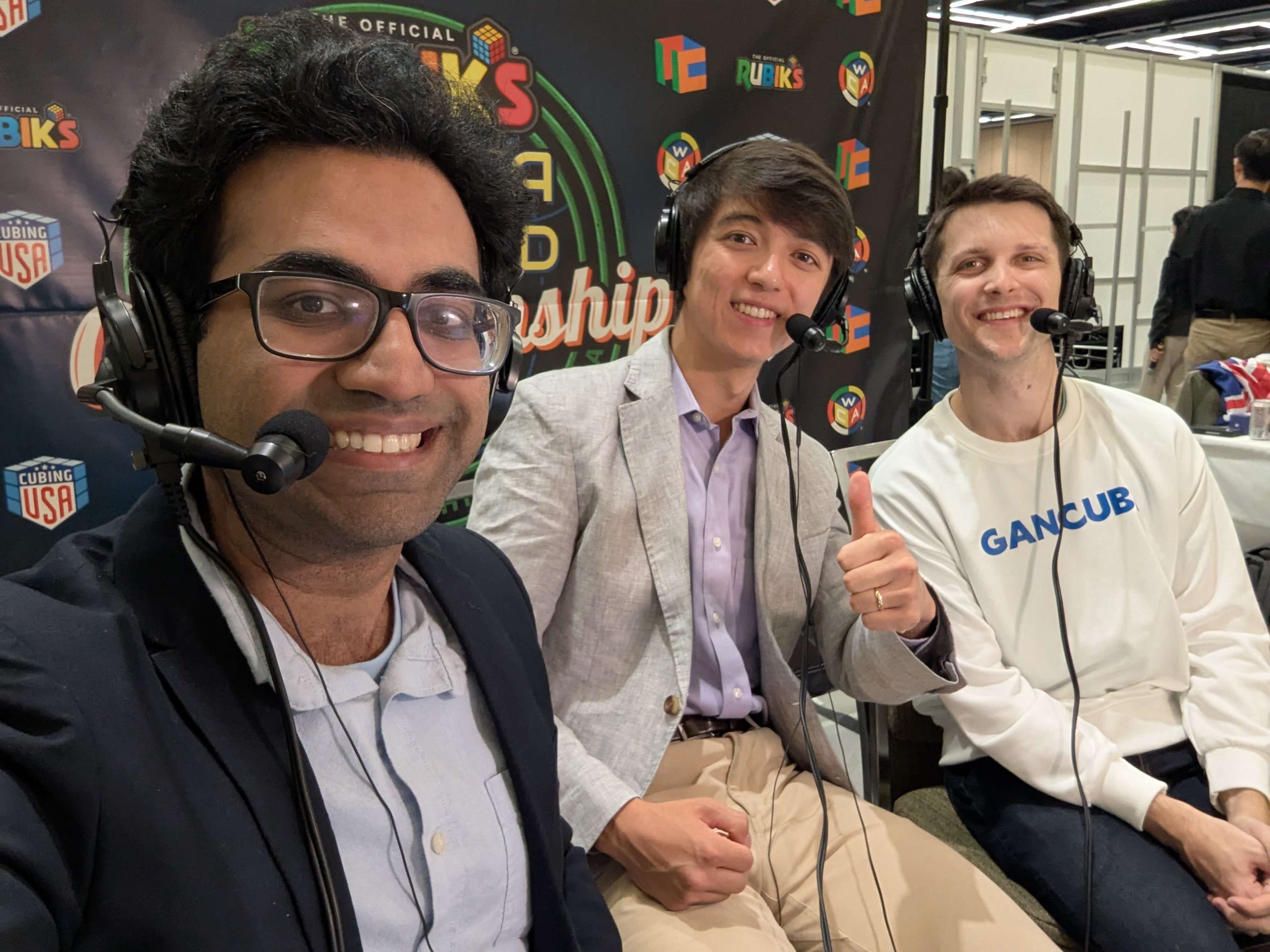
Understanding your role in the booth is hard, especially if you’ve only ever cast solo. Chris Yen was not great at this when starting out but he’s gradually grown to become a great color caster, understanding when it’s his turn to jump in to provide analysis and when he needs to step back and let the story play out. And of course, the main story is always the solvers. A broadcast is a storytelling device, and the casters are the narrators. Knowing when not to talk is sometimes as important as knowing what to say.
Have a Good Time
I could go on and on (maybe I’ll make a commentary guide #2?) and I learn something new from my co-casters every time I get the chance to call a competition. The world of commentary has changed so much since I started calling small locals with my buddy Preetham. Back in those days, we just threw the stream up and goofed around and did whatever we could to make it entertaining (by the way, shout out Denniel Santos and AJ Le, I call them the clown cast affectionately because it reminds me of the post-COVID era). And that’s probably the most important lesson: bring positive energy to the booth, be fun to work with, and enjoy talking about twisty puzzles from the best seat in the venue. Not every competition or event is or should be buttoned-up and professional. Cubing would be boring if casters just rattled off cross colors and algs for the entire day. Having a pep in your voice and energy in your casting is key to delivering a fun broadcast. Listeners definitely understand that energy through their screens and get excited to watch and interact with cubing. Bring that passion to the booth, and maybe you’ll inspire someone to pick up a puzzle and join our fantastic community, too.
The commentary has been great so far. I'm really enjoying it. I've been very impressed.